Geography and characteristics of the Nive
The Nive originates in the Basque Pyrenees mountains, above 1,500 meters altitude. It flows approximately 77 kilometers before joining the Adour in Bayonne. Its route offers extraordinary landscapes, from rocky peaks of high lands to lush Basque valleys.
The Nive crosses several regions and cultures before reaching the heart of Bayonne. This geographic diversity makes it a unique river, capable of refreshing, nourishing, and fascinating all who encounter it.
A tumultuous and powerful watercourse
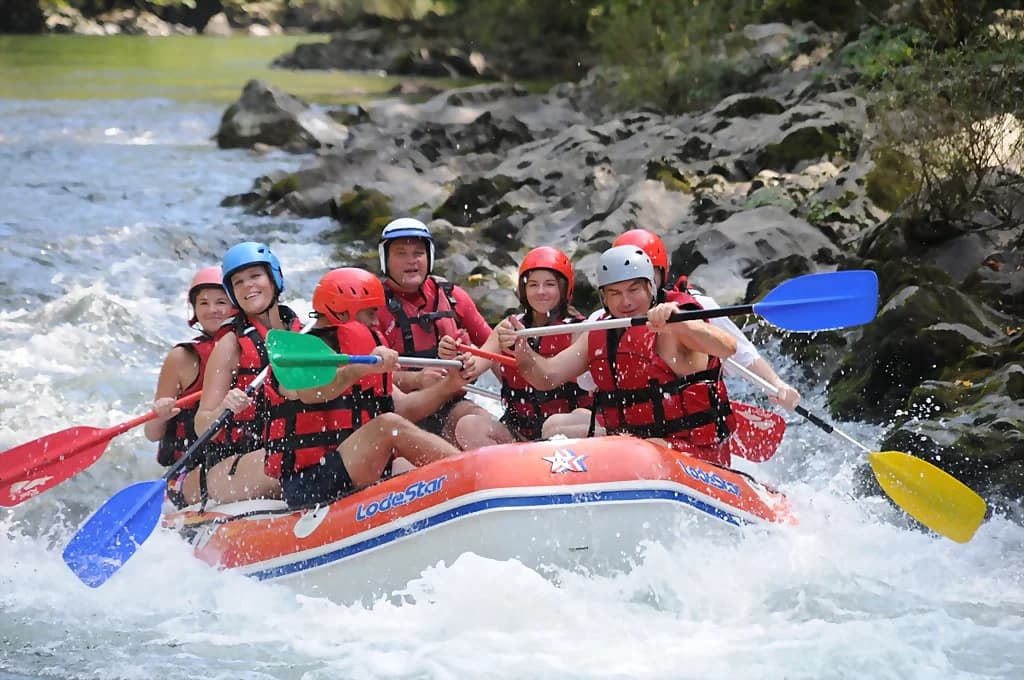
The Nive is known for its turbulent white water. From spring snowmelt to autumn rains, it's often tempestuous. The rapids dotting its course are classified II to III in difficulty, making it ideal terrain for white water sports.
But the Nive isn't only action. It also offers calm, peaceful sections where natural beauty takes precedence. This alternation between dynamism and serenity is what makes it special.
Rapids classification
The international rapids classification (Class I to VI) places different Nive sections in an accessible range. Class II sections are perfect for beginners, while Class III sections offer more challenge for intermediates. No section approaches Class IV or V, making the Nive perfect for fun and safe white water activities.
Nive fauna and flora
The Nive's banks are bordered by lush vegetation. Chestnuts, oaks, hazels, and birches form a luxuriant forest creating picturesque landscapes. In spring and autumn, leaf colors make the descent even more poetic.
On the fauna side, the Nive harbors trout, salmon (a species being restored), otters, and an impressive variety of aquatic birds. Conservation teams continuously work to maintain this precious river's ecological balance.
Bidarray's cultural heritage
Bidarray, the main village of lower Nive, is a Basque Country gem. Built according to traditional Basque architecture with its characteristic red and white-framed houses, the village breathes authenticity and history.
Bidarray's parish church, with its traditional Basque cemetery, testifies to centuries of human presence. Strolling the village's cobbled streets after your rafting descent is a perfect way to extend your connection with the region.
Economic and social history
Historically, the Nive was an important commercial waterway. Mills along the river fueled the local economy for centuries. Wood transported by the current supplied Bayonne shipyards. Fishermen exploited its fish resources.
Today, after an industrial decline period, the Nive is reborn as a major tourist attraction. White water sports and ecotourism bring new prosperity to the region, creating jobs and preserving natural heritage.
Environmental challenges
Like many European rivers, the Nive faces challenges: diffuse agricultural pollution, hydroelectric dams affecting salmon migration, and climate change altering seasonal flows.
Environmental organizations work to restore salmon populations, improve water quality, and maintain ecological balance. These efforts aim to preserve the Nive for future generations.
Why Bidarray is the best starting point
Bidarray offers an ideal starting point for exploring the Nive. It's in this region that the river reaches perfect balance: enough power for adrenaline, enough beauty to inspire. The rapids are well-marked, conditions generally safe, and scenery breathtaking.
Moreover, Bidarray is strategically located between the Pyrenees and the Basque coast, making it an ideal base for combined adventure-culture vacations.
Conservation and future
The Nive's future depends on collective commitment to its preservation. Ur Bizia, as a local operator, actively works to promote sustainable tourism and environmental respect. Every participant in our activities contributes to a region's economic viability that values its river and nature.
By choosing to explore the Nive, you participate in its history. Come explore this emblematic river, respect its powerful waters, and take home a new appreciation for the Basque Country's natural heritage.